Choosing the right workers' comp bill review software affects cost savings, processing speed, and whether every reduction holds up in a dispute.
While many platforms look similar on the surface, differences in speed, transparency, and integration can change outcomes in a meaningful way.
This guide covers what to evaluate in 2026, how legacy, managed, and modern approaches compare, and what explainable, real-time bill review looks like in practice.
What Is Workers' Comp Bill Review Software?
Workers' comp bill review software applies state fee schedules, rules, and pricing logic to medical bills to determine the appropriate reimbursement amount.
Core capabilities include:
- Applying jurisdiction-specific fee schedules
- Validating billing codes and modifiers
- Calculating allowed amounts
- Generating documentation to support pricing decisions
More advanced platforms extend this with real-time processing, full audit trails, and API-based integrations.
What Matters Most When Evaluating Software
The biggest differences between platforms come down to a few key areas:
1. Speed (Real-Time vs Batch Processing)
Many systems still rely on delayed or batch processing.
Modern platforms can price bills in milliseconds, enabling:
- Immediate feedback inside adjudication workflows
- Faster turnaround for adjusters and billing teams
- Real-time integration with claims and billing systems
What good looks like: pricing returns in milliseconds so review can happen in the workflow, not after the fact overnight.
2. Transparency (Black Box vs Explainable Results)
One of the most common challenges in bill review is lack of visibility.
Some systems return a final number without clearly showing:
- Which fee schedule was applied
- How calculations were performed
- What rules influenced the result
Look for platforms that provide:
- Step-by-step calculation breakdowns
- Rule citations
- Clear, auditable outputs
What good looks like: an adjuster, provider, or auditor can open the result and see the fee schedule, math, and regulatory source without calling a specialist.
3. Accuracy and Consistency
Consistent application of fee schedules is critical.
Inconsistent pricing can lead to:
- Disputes and rework
- Compliance risk
- Reduced trust between stakeholders
What good looks like: the same inputs produce the same outputs every time, across states and claim types.
4. Integration Capabilities (API vs Closed Systems)
Bill review rarely exists in isolation.
Modern software should offer:
- API access
- Real-time pricing endpoints
- Flexible integration into existing workflows
What good looks like: the same engine powers both a web portal and an API, so you do not end up with two pricing truths.
5. Auditability and Compliance
Audit support is essential for both payers and providers.
Look for:
- Complete audit trails
- Clear documentation
- Repeatable, defensible outcomes
What good looks like: every decision is shareable and defensible, with the source material behind the number included in the result.
What Explainable Bill Review Looks Like in Practice
Most platforms return an allowed amount. Better systems return the full decision trail:
- Which fee schedule and jurisdiction applied
- How units, modifiers, and rules changed the number
- The regulation or schedule source behind each step
BillSentry packages that trail as a RuleTrace™: a shareable report for every bill that shows the rules, the math, and the regulation that backs it.
See it live
Open a real RuleTrace™ report
Review line-by-line pricing, calculation steps, and regulatory sources on a live sample bill. This is the same report format BillSentry produces for every review.
Already have a RuleTrace™ ID from an Explanation of Review (EOR)? Open it at app.billsentry.net.
Types of Workers' Comp Bill Review Software
Not all platforms are built the same. Most fall into one of these categories:
Legacy Bill Review Platforms
These systems are often deeply embedded in existing workflows.
They typically:
- Operate on batch or delayed processing
- Provide limited visibility into pricing logic
- Require additional steps to explain outcomes
They can be reliable, but are often slower and less flexible than newer approaches.
Managed Bill Review Services
Some organizations outsource bill review entirely.
This can:
- Reduce internal workload
- Provide operational support
But may also:
- Limit control over pricing decisions
- Introduce delays
- Make real-time integration more difficult
Modern, API-First Bill Review Platforms
A newer category focused on speed, transparency, and flexibility.
These platforms are designed to:
- Deliver real-time pricing
- Provide full visibility into calculations
- Integrate directly into internal systems
They are increasingly used by organizations that want faster processing and more control over outcomes.
A Modern Approach to Bill Review
Modern bill review platforms focus on eliminating delays and improving transparency.
For Payers & TPAs
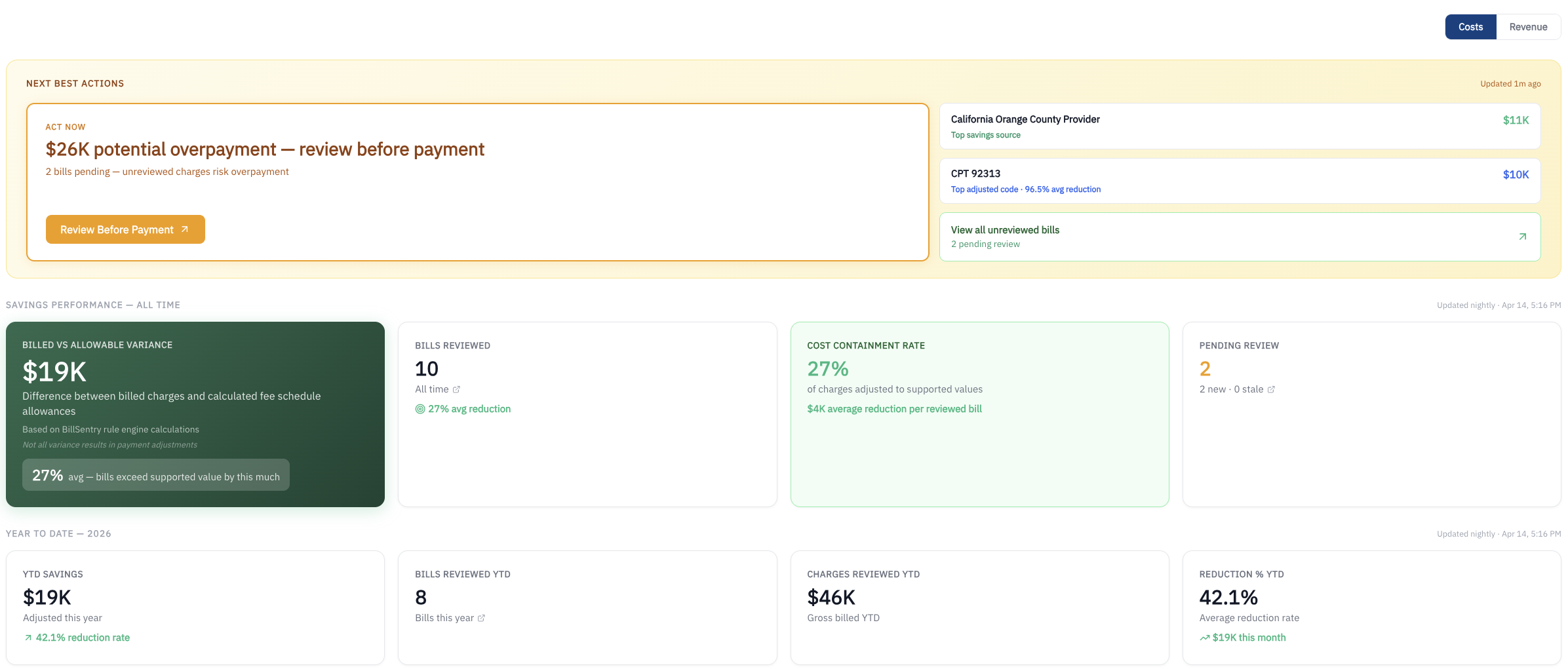 Click to enlarge
 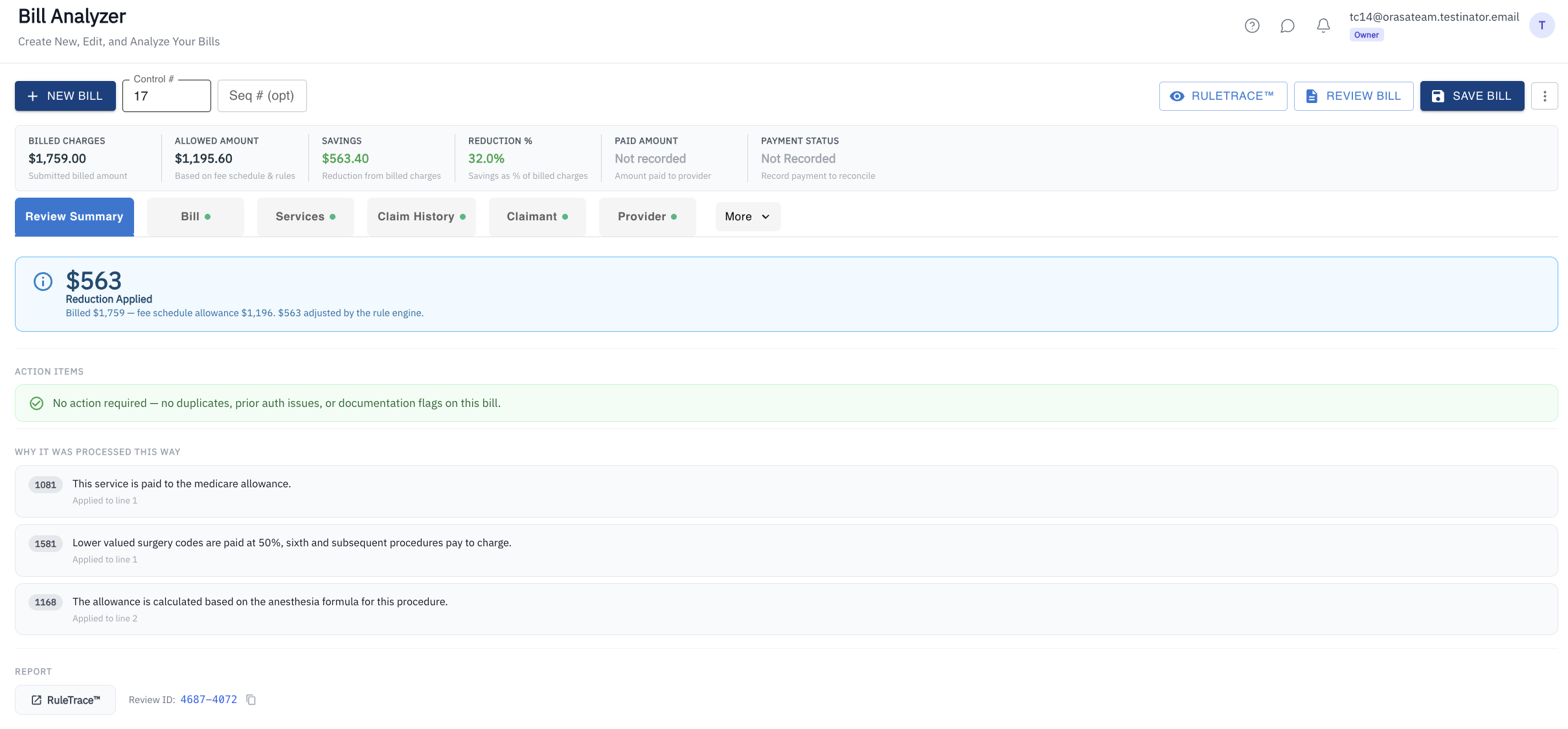 Click to enlarge
 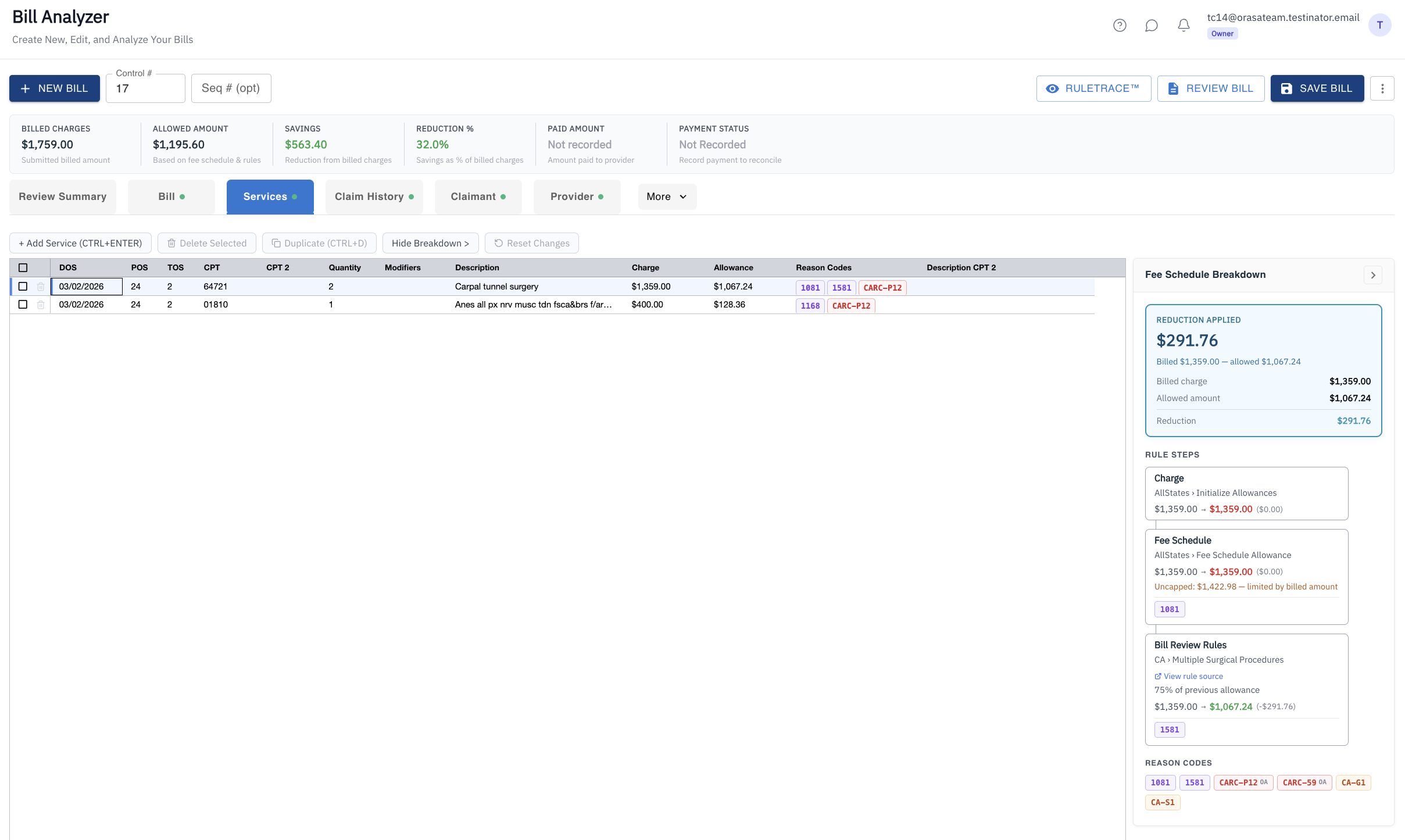 Click to enlarge
 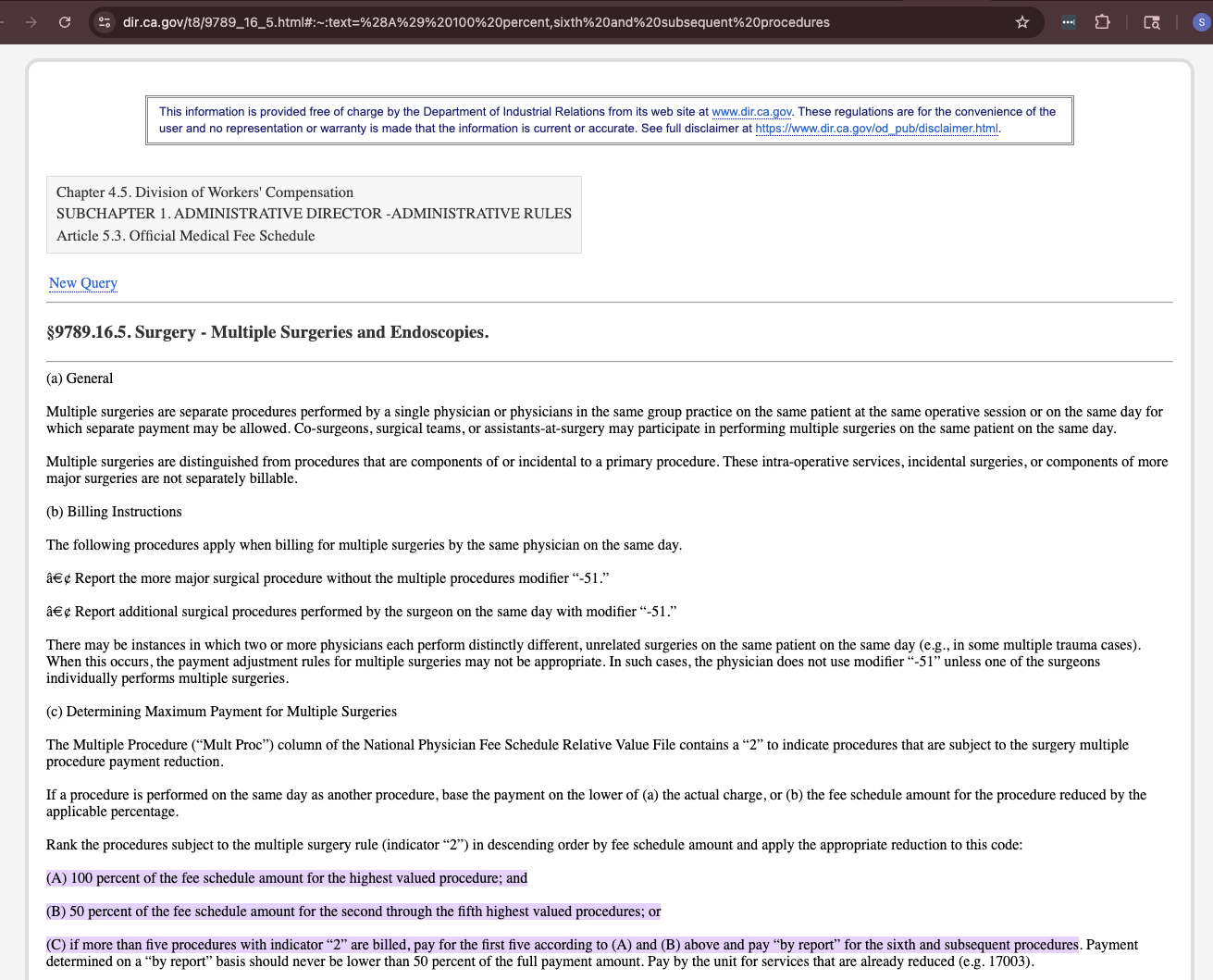 Click to enlarge
 For Providers & Billing Teams
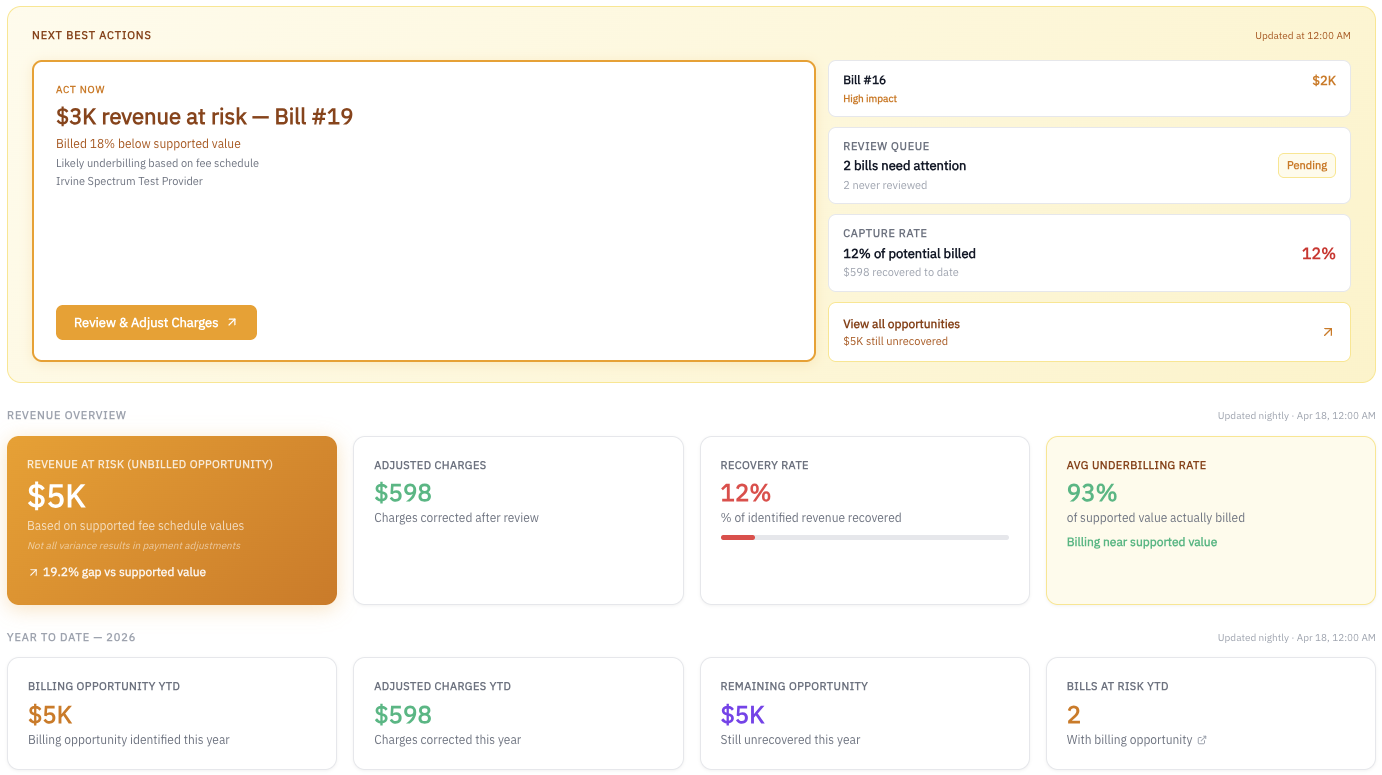 Click to enlarge
 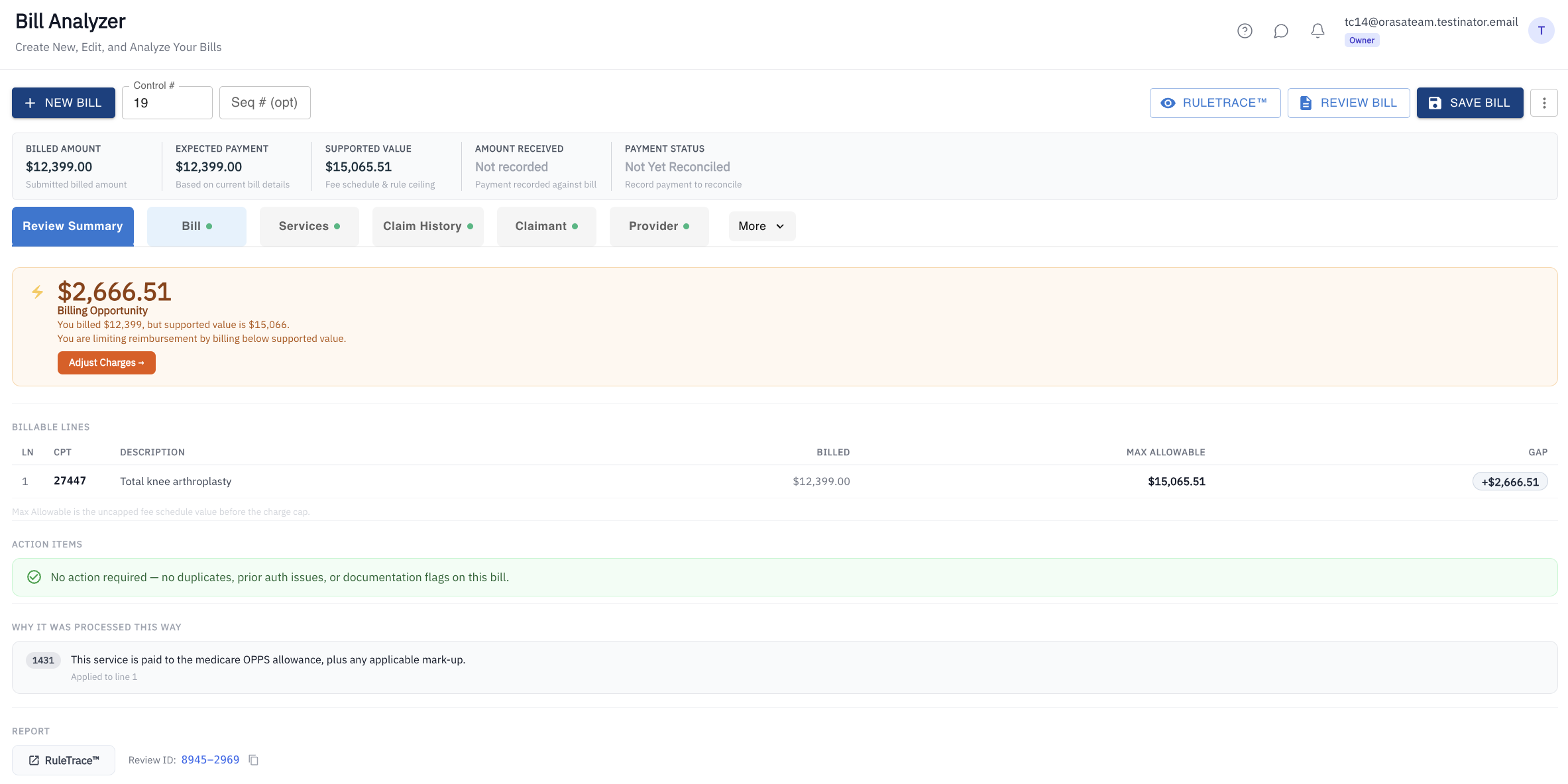 Click to enlarge
 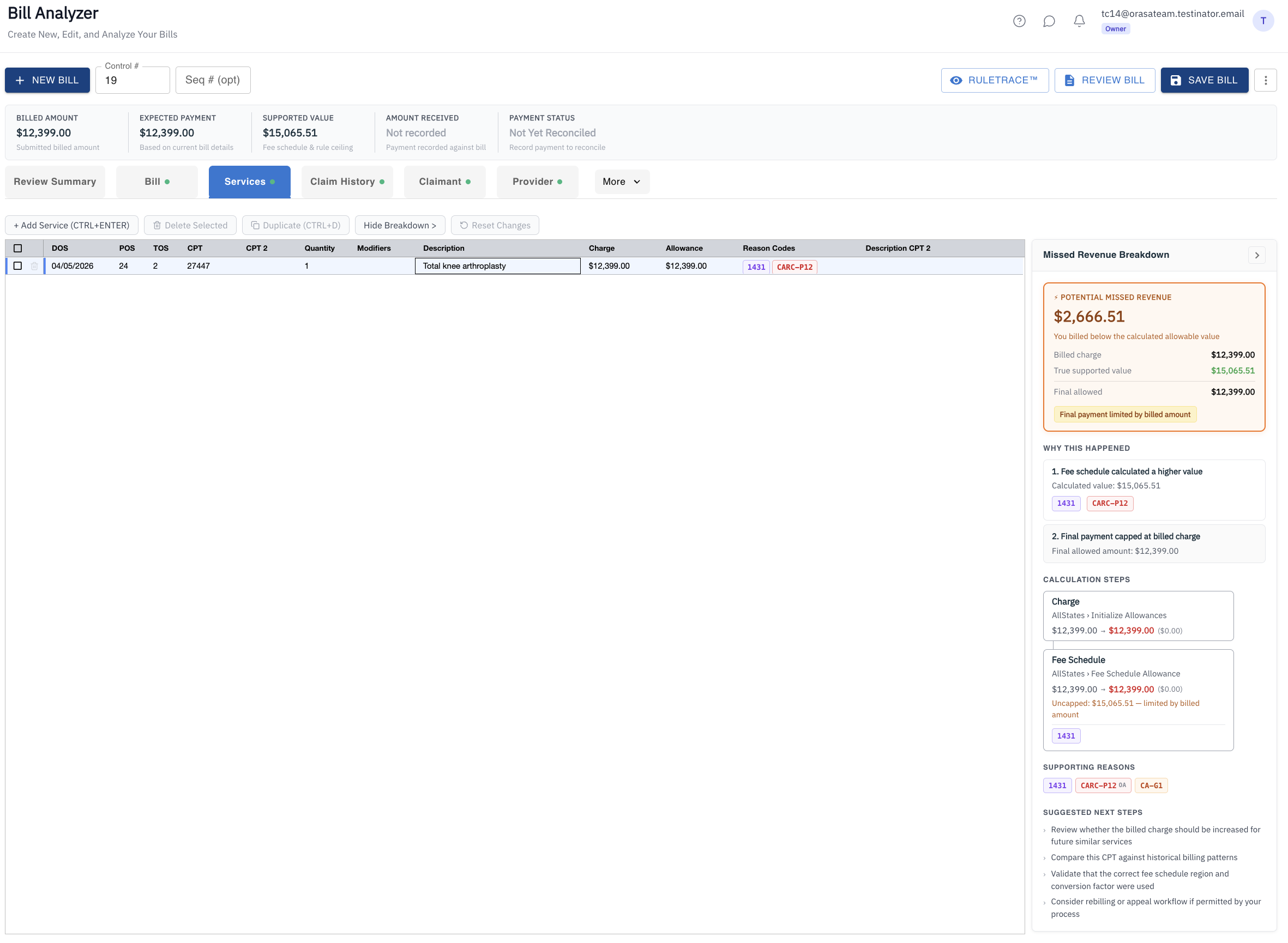 Click to enlarge
 Key characteristics include:
- Real-time processing instead of batch workflows
- Fully explainable pricing decisions
- Consistent application of rules and fee schedules
- Seamless integration into existing systems
BillSentry: Modern Workers' Comp Bill Review Infrastructure
BillSentry is workers' comp bill review infrastructure. We price every bill against state fee schedules in real time and show the exact rule, calculation, and regulatory source behind each number, so every decision is defensible. Same engine whether your team uses our web portal or calls the API. All 50 states, including OWCP.
That design maps directly to the evaluation criteria above:
| What to look for | How BillSentry delivers |
|---|---|
| Real-time speed | Sub-second pricing built for workflow and API use |
| Transparency | Full RuleTrace™ on every result, with rules, math, and sources |
| Accuracy and consistency | One rules engine across jurisdictions and claim types |
| Integration | API-first architecture plus a web portal on the same engine |
| Auditability | Shareable reports and regulatory citations for disputes and audits |
Who it is built for
- Payers and TPAs: catch overpayments earlier and defend reductions with clear documentation
- Providers and billing teams: see underpayment risk and understand why a bill was reduced
- Technology partners: embed fee schedule pricing through the API without building the engine yourself
Also see How it works, Payers & TPAs, Providers, Technology partners, and Pricing.
Legacy vs Modern Bill Review Software
| Feature | Legacy Approaches | Modern Approaches |
|---|---|---|
| Processing Speed | Minutes to days | Milliseconds |
| Transparency | Limited | Full visibility |
| Integration | Closed systems | API-first |
| Auditability | Partial | Complete |
| Flexibility | Low | High |
How to Choose the Right Software
The best solution depends on your organization's priorities. Start with these questions:
- Do you need real-time pricing inside existing workflows?
- Do you require clear, explainable outputs for disputes and audits?
- Will you need API integration, a portal, or both on the same engine?
- How important is auditability and compliance documentation?
Who a modern approach is best for
Modern API-first platforms, including BillSentry, fit best if you need:
- Real-time or near-real-time pricing in the workflow
- Explainable outputs for disputes, EORs, and audits
- Portal and API access without replacing your full stack
Legacy platforms or fully managed services may still fit if your priority is outsourced volume handling and you can accept batch timing with less visibility into the pricing logic.
If speed and transparency are priorities, open a live RuleTrace™ or start a free trial to evaluate the modern approach directly.
Final Thoughts
Workers' comp bill review is evolving. Organizations are moving toward solutions that provide faster processing, greater transparency, and cleaner integration into modern workflows.
Understanding the differences between legacy, managed, and modern approaches is the first step. The next step is seeing explainable pricing on a real bill.
See the math on a real bill
Open a live RuleTrace™ sample, or run your own bill in a free trial.
Learn More
- Explore the platform: billsentry.com
- View how it works: How it works
- See a live RuleTrace™: app.billsentry.net/ID/8098-2528
- Request a demo: